
 StableCommerce
Import your Amazon catalog into a store that belongs to you, and keep selling on Amazon while you do. You keep the margin Amazon takes on everything sold there, and every buyer becomes a contact you own. Live in about three minutes.
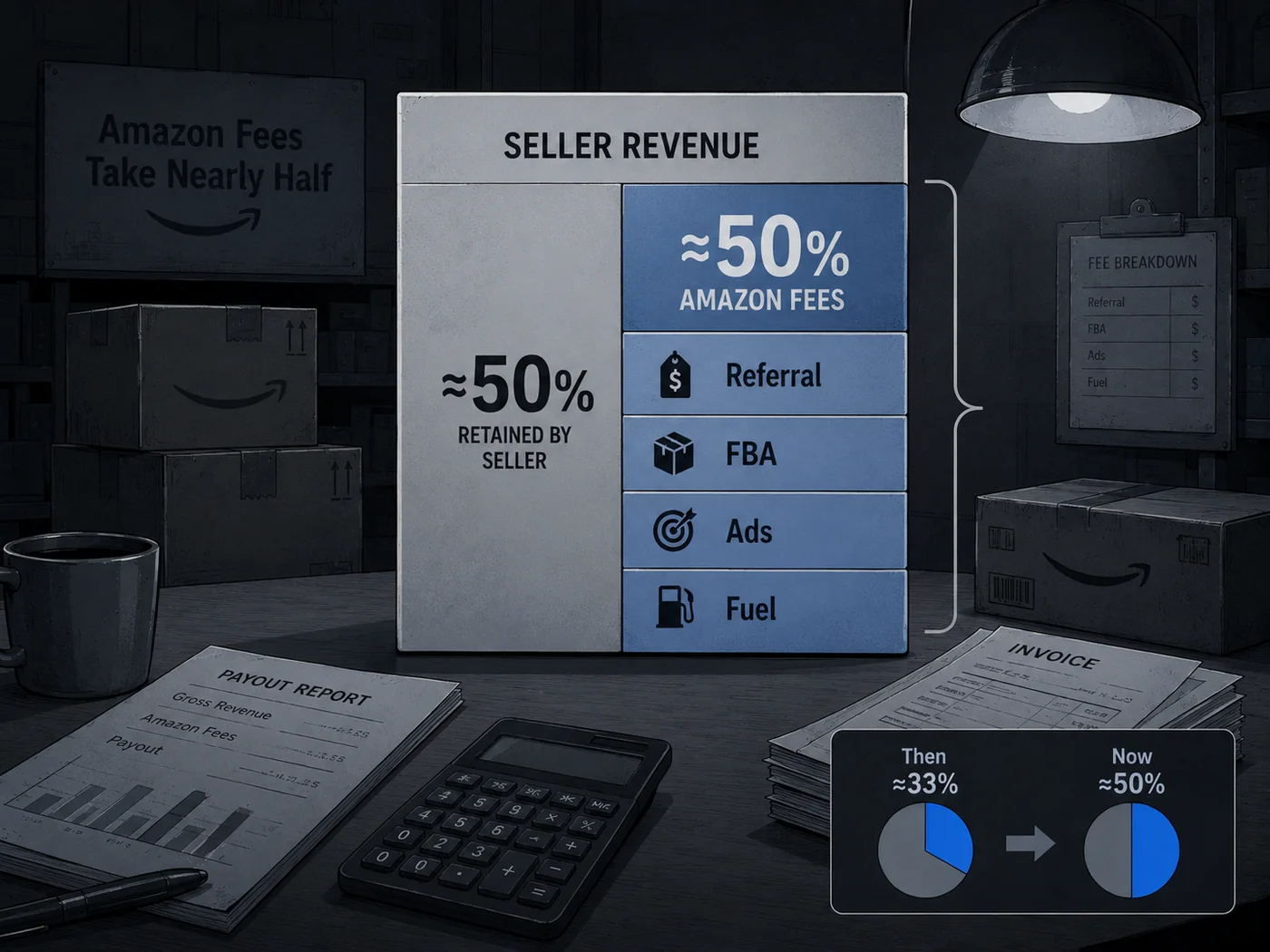
Sources: Marketplace Pulse, “Amazon’s Cut of Seller Revenue” (2026 update); Amazon FY2025 10-K, third-party seller services net sales; Amazon Business Solutions Agreement §3 (funds withheld up to 90 days, “may be held longer”); Amazon’s 2025 Trustworthy Shopping Experience Report, counterfeit product removals.
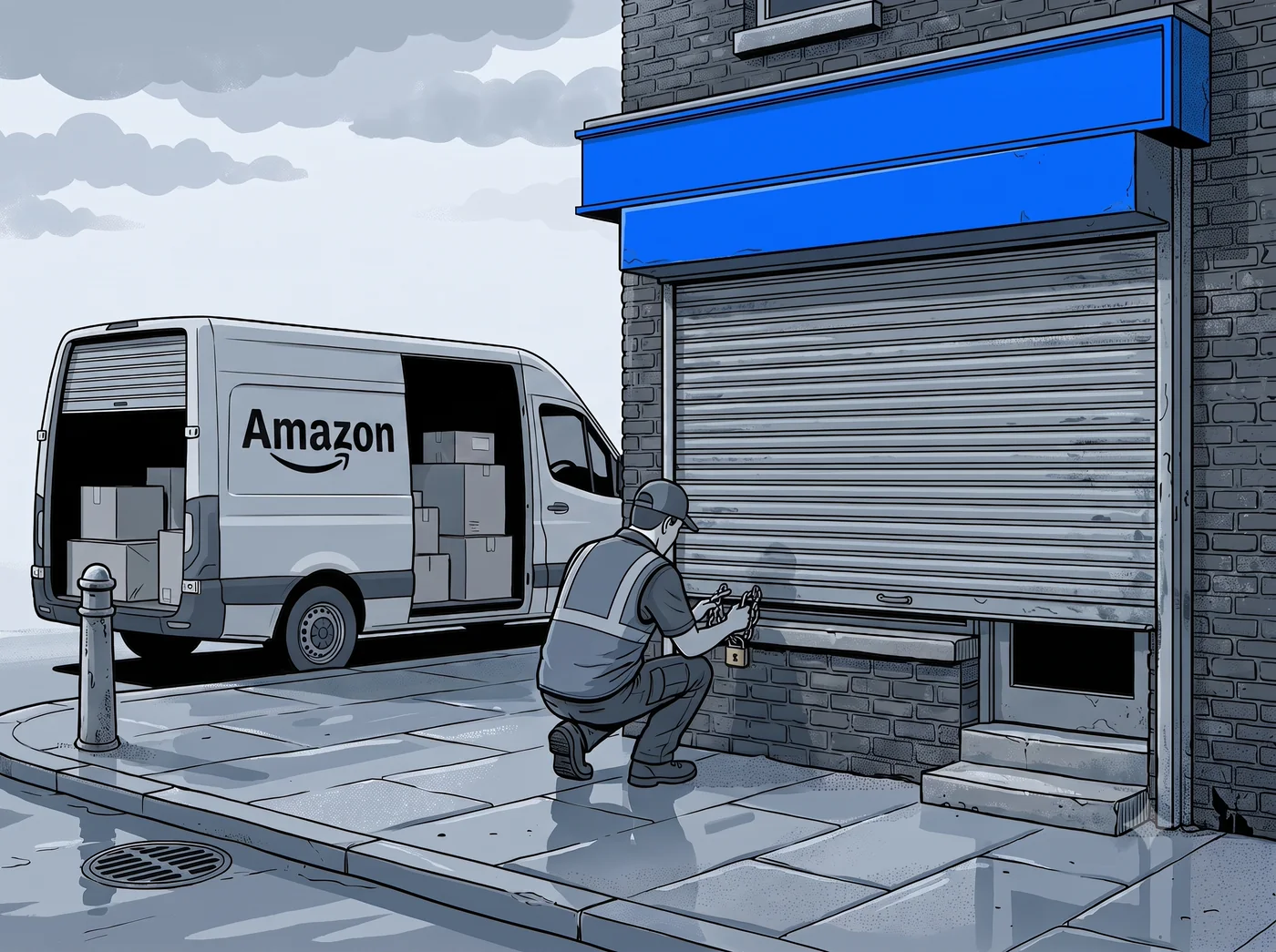
Section 3 of the Business Solutions Agreement lets Amazon withhold your funds for 90 days after a deactivation. It also says outright they may be held longer. If Amazon is your only channel, an automated decision freezes the whole business while you write appeals into a form.
A second channel you own can’t be switched off. The domain, the Stripe account and the buyer list are all in your name, and payouts land in your bank on Stripe’s schedule.

Referral fees run 8–45% by category, and 15% covers most of them. FBA fulfilment has climbed roughly 30% since 2020, with new fee hikes and a fuel surcharge added in 2026. Then Sponsored Products on top, because without ads the listing you already own doesn’t get seen. Add it up and Amazon’s effective take rate is now running close to 50% of seller revenue, up from about a third a decade ago.
On a store you own, the take rate is a flat $20/mo and 1% per transaction. Every sale that comes through it keeps the difference, on top of what Amazon is already bringing you. Run it against your own P&L in the calculator below.
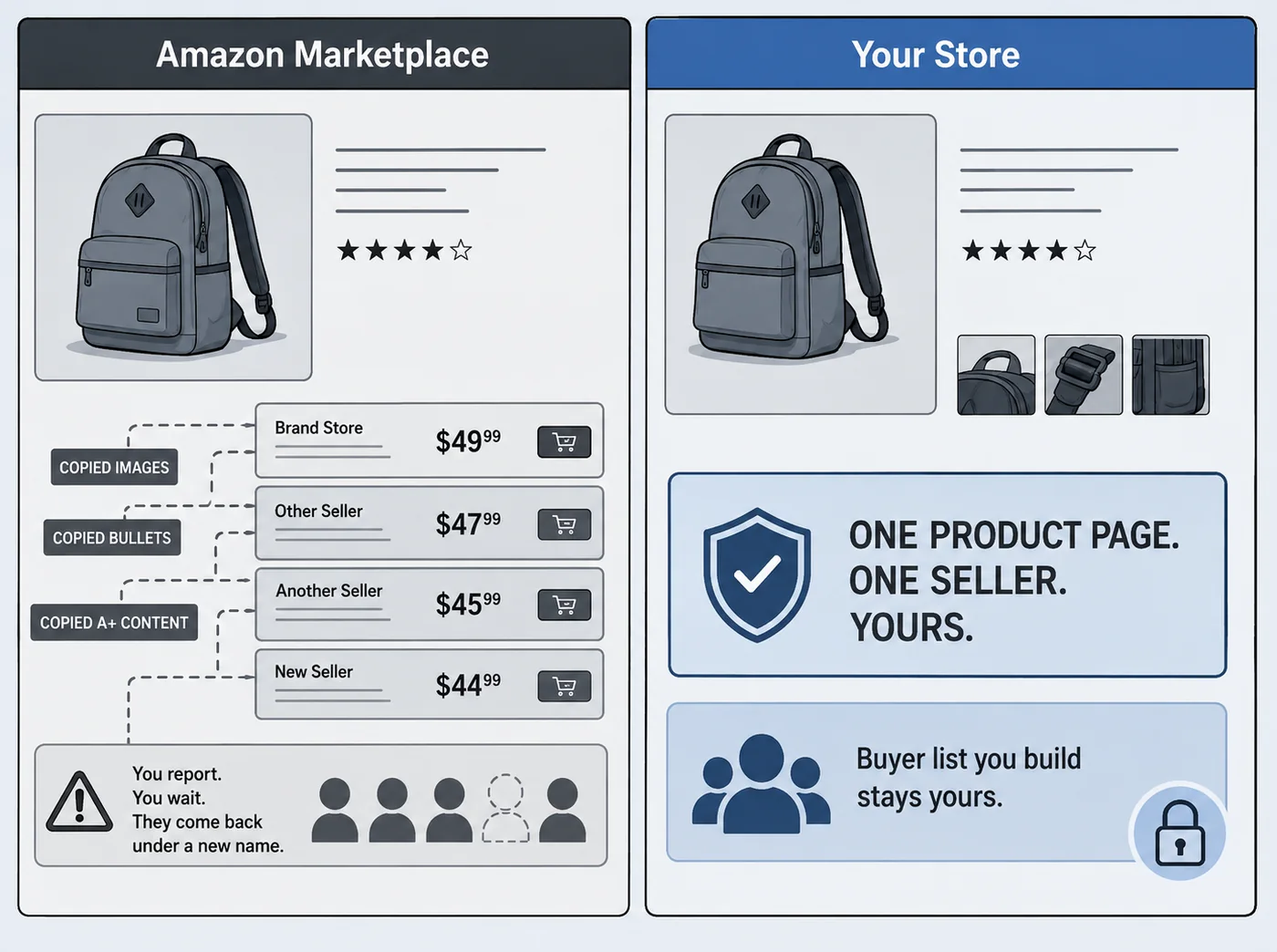
They copy your bullets, your images, your A+ content, then undercut you on the listing you built. You file a report, you wait, they come back under a new name. That is what a shared product page allows, and it doesn’t stop.
On your store there is one product page and one seller. Whoever copied you last week can’t attach themselves to it, and the buyer list you build there stays yours.
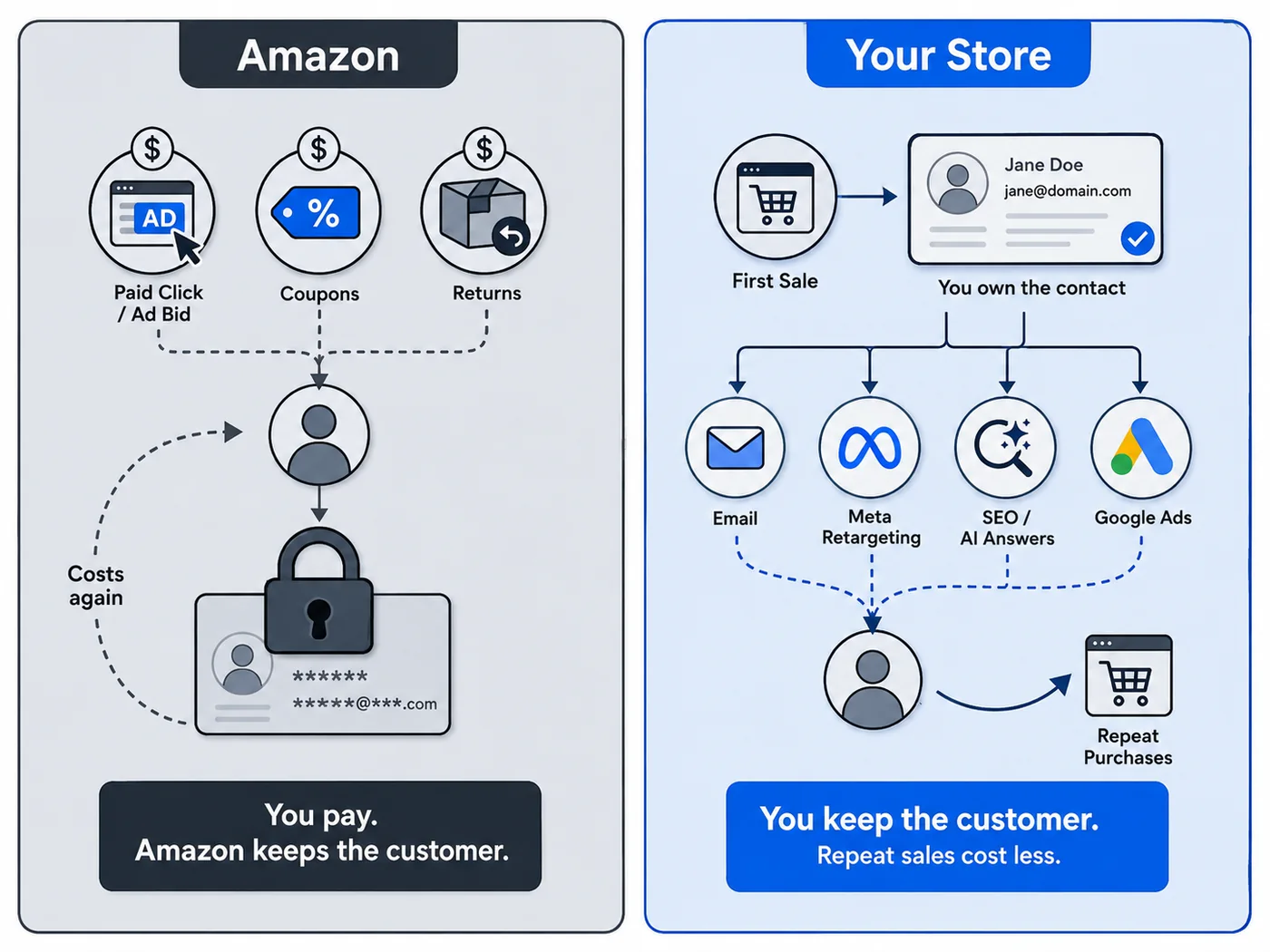
You bid for the click, you fund the coupon, you absorb the return. Then the buyer belongs to Amazon. You never get a name or an email, so the second sale costs you the same as the first, and next time they search they may be shown someone else.
On a store of your own the same buyer arrives as a contact you keep — which is also who sends the traffic at the start: people who already paid you once. Email brings them back, Meta retargets them, and SEO plus AI-answer visibility picks up the rest. Stable Commerce sets all of that up, and Google Ads when you want them. Most sellers keep selling on Amazon the whole time and run both.
Your Amazon account carries on exactly as it is. There is no migration project and nothing to re-type.
The agent reads your listings: titles, images, variations, pricing.
Design, product pages, copy and Stripe checkout. Median build time: 3m 23s.
Point a domain, connect Stripe, and the money lands in your bank. No holding period.
Email your past buyers, retarget them, and rank in search and AI answers.
Same revenue, two cost structures. Move the sliders to your own numbers and see what a sale is worth on each channel.
This compares platform costs on revenue you already have. It is not a forecast of sales, and it excludes what you choose to spend marketing your own store. That spend is optional and yours to control. Sponsored Products largely isn’t.
Amazon never hands you the buyer’s email. On your store every order is a contact you own, export and email whenever you want.
The domain, the Stripe account and the data are in your name. There is no Section 3 review and no 90-day hold on money you already earned.
Paste your storefront link. Titles, images, variations and pricing come across without you re-typing a single listing.
There is no shared listing and no buy box to lose. Nobody else can attach themselves to the page you built and undercut you on it.
No referral fee, no per-unit fulfilment cut, and no bidding on your own brand name. A flat monthly price and 1% per transaction.
Tell the agent what you want in plain words: pricing, copy, layout, a new collection. There is no admin panel to learn and no developer to book.
A flat fee you can predict. It doesn’t grow when you do. Over 1,000 stores run on Stable Commerce.
At first, you do, starting with the buyers you already have. Email reactivation, Meta retargeting, SEO and AI-answer visibility are all set up for you. Ads are optional and run on your budget. Amazon keeps sending you the customers it always did. The long version is in this section.
Yes, and most people do. Nobody is asking you to turn Amazon off. Keep that revenue coming while your own store grows alongside it.
It’s $20/mo plus 1% per transaction. On $30k/month that’s roughly 1.1% all-in, against an Amazon effective take rate that now runs past 50%. Put your own numbers in the calculator.
It takes one link. The agent reads your storefront and imports titles, images, variations and pricing. Median build time is 3 minutes 23 seconds. You review it before anything goes live.
Then don’t. The preview store costs nothing and doesn’t ask for a card. Claiming it and running it on the free plan costs nothing either, and that includes a custom domain, Stripe payouts and your full catalog. Premium is there when there’s money moving again.
You don’t build it. You paste a link, and a few minutes later you get a preview link to look at. If you don’t like it, you’ve lost three minutes.
They won’t. What changes is that on your store there is one product page and one seller, so nobody can attach themselves to your listing. The buyer list and the brand you build there are the part copycats can’t take.
It does, which is why this is a second channel. What changes is that part of your revenue stops depending on someone else’s decisions.
Your store, your catalog and your customer data are yours to take, any time you ask. It’s a Stripe account in your name and a domain in your name. No lock-in.
There’s nothing to configure. You change things by describing them. If you sell handmade goods on Etsy or Amazon Handmade, this page is written for you instead.
Payouts run on Stripe, in your own account, with the same buyer and seller protection you already rely on. No third party sits between you and your money.
Leave your email and your Amazon storefront link. We build a real store around your actual products and send you the link to look around. Nothing to cancel, no card.